


Sustainable forestry has become a buzzword for anyone involved in forests, rangelands, technology, or natural resources. These days, wildfires are breaking out everywhere, from the Siberian taiga to Iran’s ancient Hyrcanian forests! The global ecosystem is at risk, and climate change driven by these events is getting more severe every day. According to United Nations reports, over 42% of the world’s forest area is threatened by wildfires, illegal logging, and pollution.
This is where topics like new tools and sustainable forestry technologies gain traction. Various tools have been available for years: from artificial intelligence (AI) to the Internet of Things (IoT) and advanced sensors, offering innovative solutions for monitoring, protecting, and optimally managing forests! The goal is to boost forest sustainability and minimize wildfire damage.
In this article, we’ve aimed to introduce the best sustainable forestry tools and technologies for the new year. Keep reading to learn more.
Why Are Cutting-Edge Technologies the Key to Forest Sustainability Success?
Forests aren’t just sources of oxygen and biodiversity; they play a vital role in carbon absorption and combating global warming. According to data from the Food and Agriculture Organization (FAO), using smart forestry technologies can reduce annual forest losses by up to 30%. Among these, tools that operate on real-time data, like IoT sensors and AI algorithms, can truly revolutionize forestry structures and change the rules of the game. SenseNet covers over 105 million hectares of forest land with its advanced tools, safeguarding them effectively.
Let’s dive into a more detailed explanation of these sustainable forestry tools:
A Brief Introduction to SenseNet: Pioneers in Sustainable Forestry Technologies
SenseNet, as one of Canada’s innovators in sustainable forestry technologies, has introduced a new angle to forest management by integrating AI and IoT: predicting natural disasters! Unlike traditional methods that focus on post-event reactions, SenseNet’s tools emphasize early detection and risk prediction. This approach not only cuts financial losses but also significantly aids in preserving biodiversity and forest carbon storage. In fact, 70% of forest sustainability successes in 2025 depend on such integrated systems.
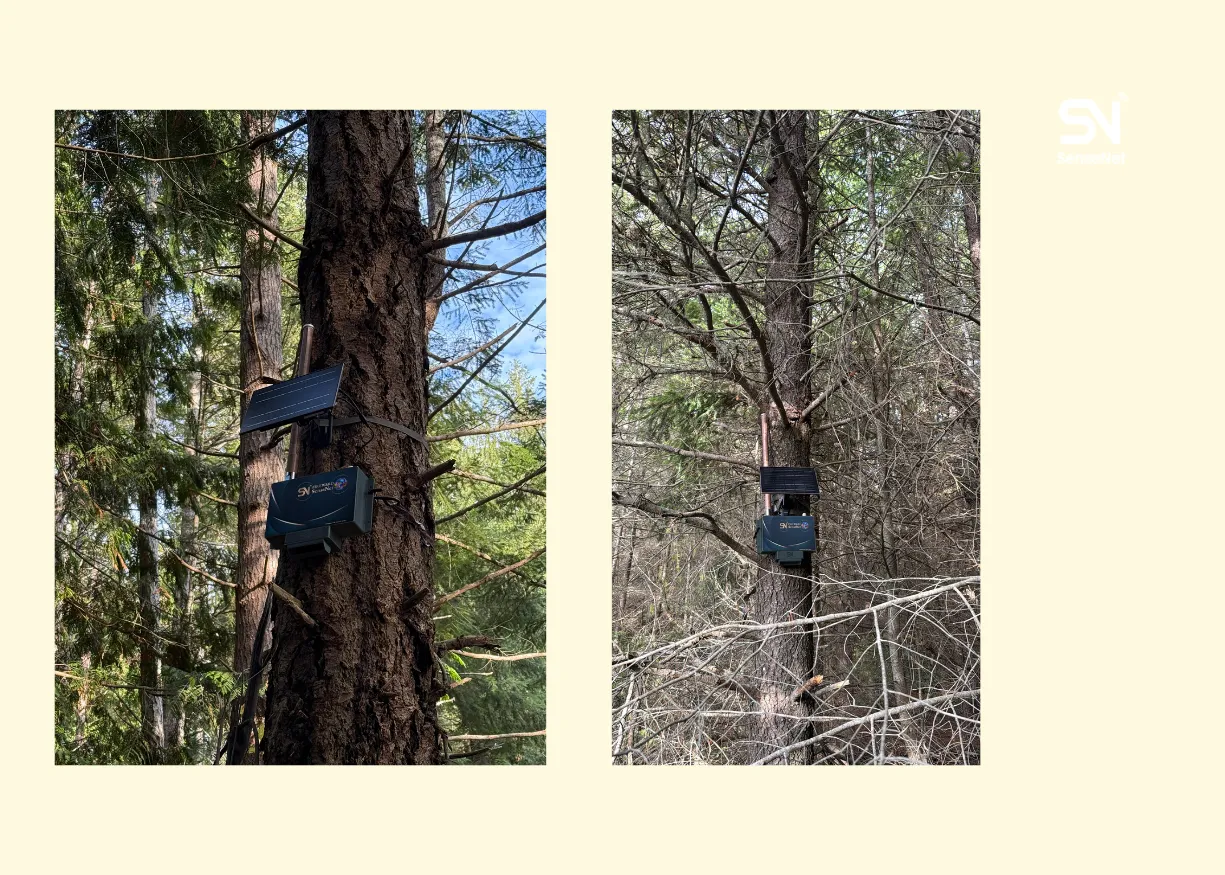
1. Gas Sensor: The Invisible Guardian of Forests
SenseNet’s gas sensor, one of the best IoT tools for sustainable forestry, detects initial gases from wildfires (like carbon monoxide and hydrocarbons) and sends alerts within minutes. With a 5-year battery life and no need for cellular or satellite networks, it’s ideal for remote areas. Its rugged design withstands harsh environmental conditions (from -40°C to +60°C), making it an unparalleled tool.
- Benefits for Forest Sustainability: Reduces fire spread by up to 80%, protects sensitive ecosystems, and cuts CO2 emissions equivalent to 100,000 tons per year.
- New Applications for Sensors: Integration with weather prediction models for daily risk analysis, which SenseNet has implemented in its platform.
This tool, by focusing on air quality monitoring in forests, opens a new dimension of sustainability: preventing secondary pollution from fires.
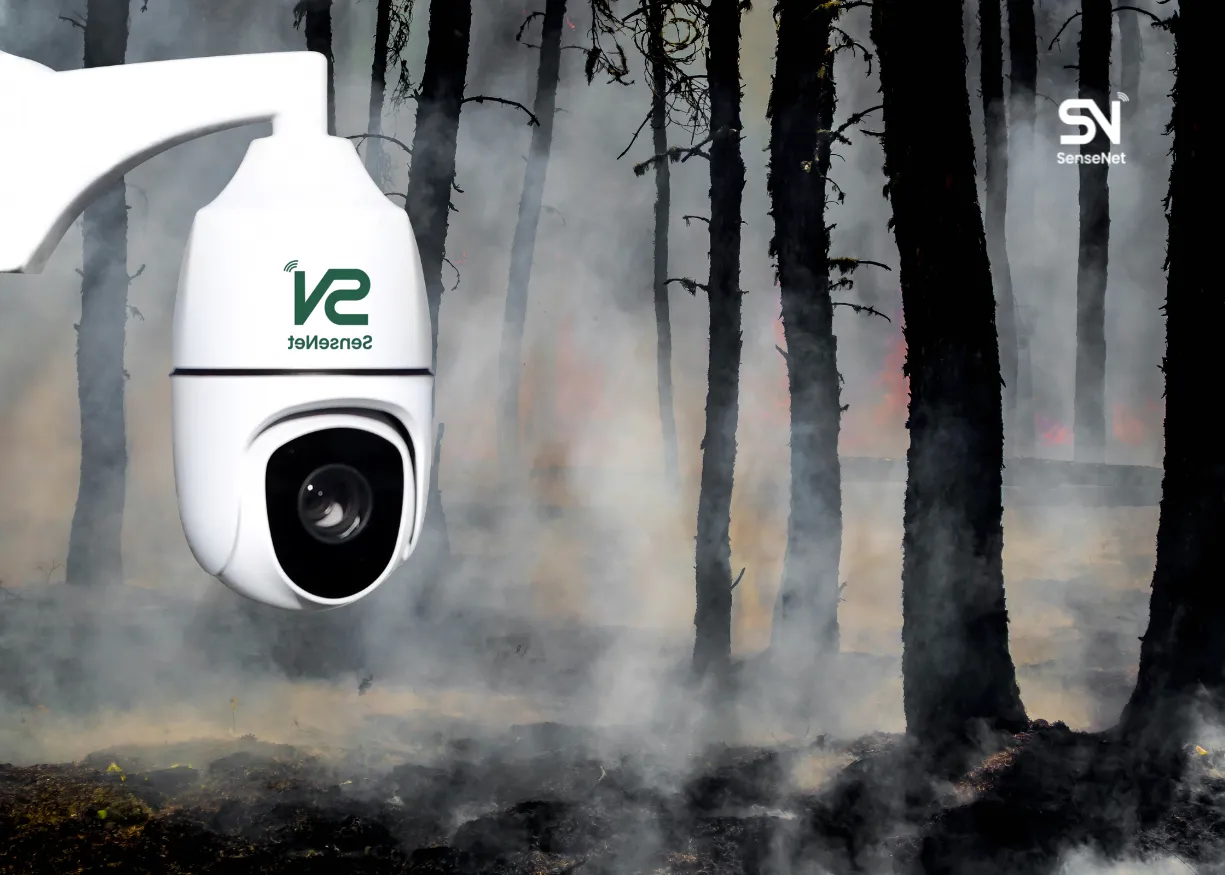
2. Smoke Detection Camera: 360-Degree AI Eyes
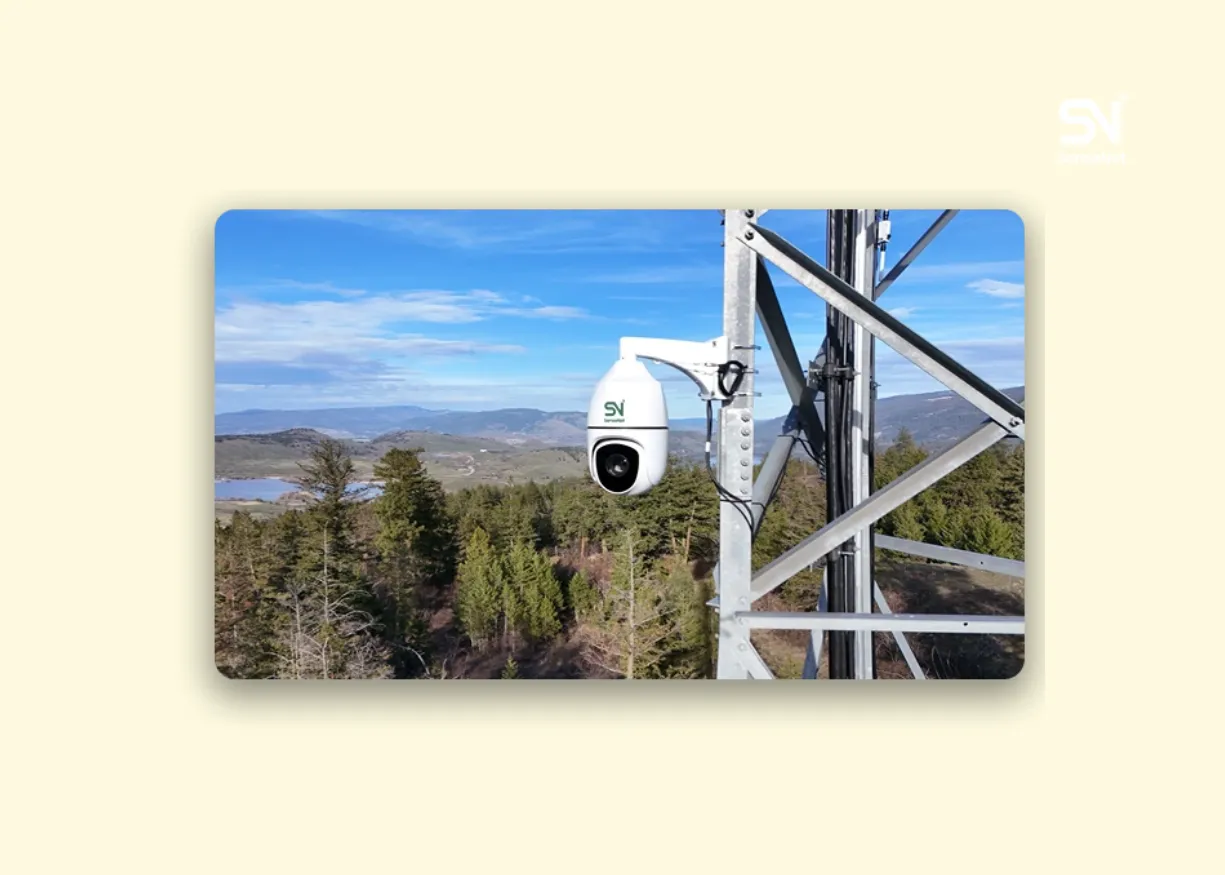
This advanced camera, with a 50 km monitoring radius and smart zoom capabilities, scans forests 24/7. Its AI algorithms detect smoke even at night and send real-time images. Compatibility with satellite networks makes it suitable for vast Canadian forests and other global regions.
- Key Features of the Smoke Detection Camera: 360-degree coverage, automated alerts, and integration with satellite data for precise hotspot mapping.
- Sustainability Impact: According to SenseNet reports, this tool reduces fire response time from hours to minutes and has saved over 50% of covered forests.
From a new perspective, this technology isn’t just a detection tool; it serves as part of smart carbon-tracking systems, using its data to calculate post-fire carbon storage.
3. Wildfire Detection & Management Platform: The Brain of Sustainability
This versatile platform integrates data from sensors, cameras, satellites, and weather stations. With 7-day fire progression forecasts and daily risk analysis, it equips forest managers for data-driven decisions.
- Platform Innovations: Smart alerts with details (like fire perimeters and hotspots), daily risk reports, and AI-based predictions.
- Benefits for Sustainable Forestry: Reduces crisis management costs by 40% and boosts efficiency in protecting 105 million hectares of forest.
SenseNet elevates sustainable forestry technologies to a new level with this platform: shifting from reactive monitoring to preventive strategies, directly contributing to UN Sustainable Development Goals (SDG 13 and 15).
Complementary Technologies in Forest Sustainability
While SenseNet is the main pillar of sustainability, various global tools enhance forest protection. Below, we highlight the best modern forestry technologies:
1. Drones Equipped with LiDAR and AI (Drone Technology)
Drones with LiDAR sensors enable 3D forest mapping, measuring timber volume, tree health, and vegetation changes. According to the World Economic Forum (2023), these tools increase forest disease prediction accuracy by up to 25%. Integrating with SenseNet’s platform strengthens aerial monitoring.
- GIS Systems and Blockchain Tracking (GIS & Blockchain)
GIS is used for geographic mapping and spatial analysis, while blockchain makes timber supply chains transparent and tracks illegal logging. These technologies, combined with SenseNet sensors, can be used for global reporting.
- Machine Learning-Based Analytical Software (ML Software)
Various tools analyze big data for forest growth prediction and resource management. According to a PMC study (2025), ML can reduce carbon emissions by up to 15%.
Conclusion: A Green Future with Smart Tools
A combination of technologies like SenseNet’s IoT sensors and AI drones promises a world where no forest burns, and we can even think about restoration over time. What do you think is missing from these systems and technologies?