

Oct 28, 2025
Neda Khanifar
Have you ever heard of the Internet of Things (IoT)?
Who could have imagined that IoT would evolve to a point where it could prevent massive wildfires and irreversible environmental crises?
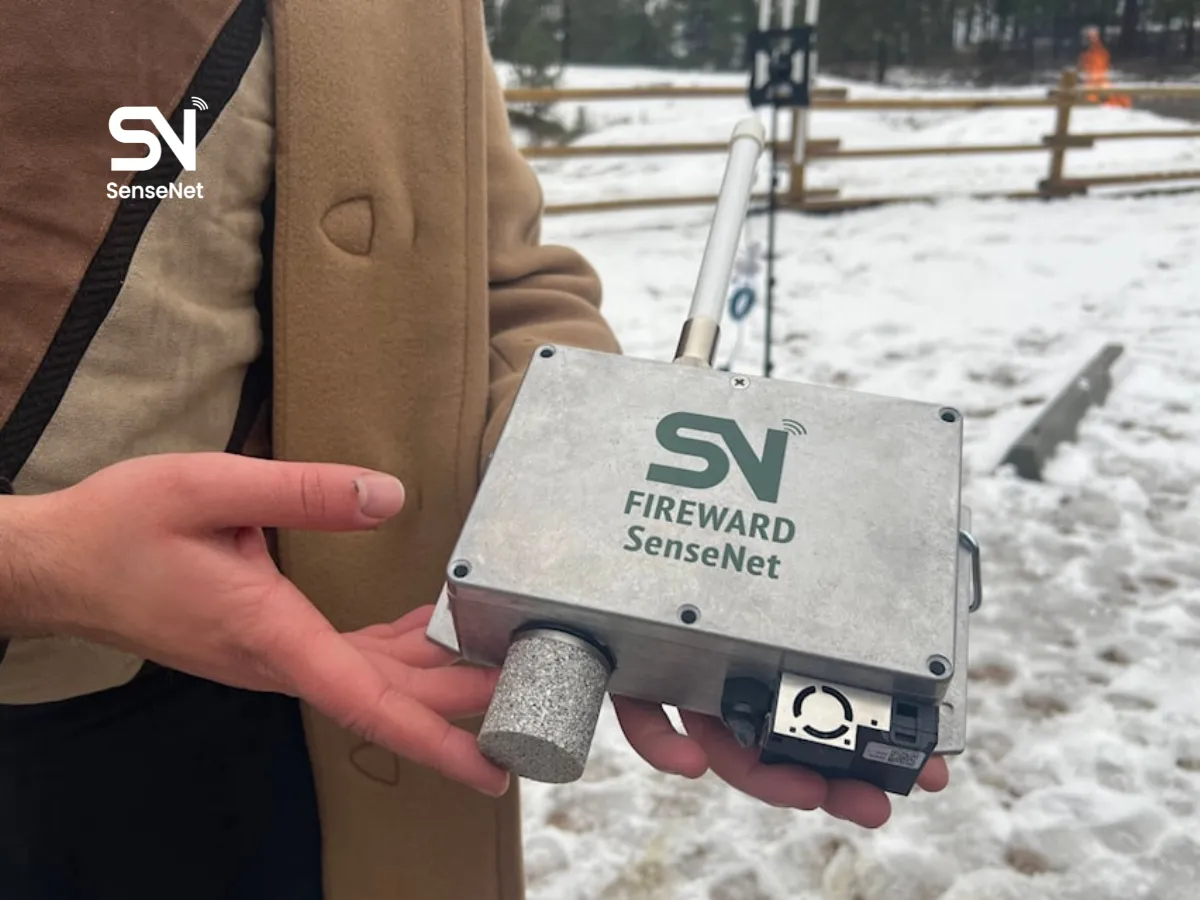
Today, many leading tech companies leverage IoT in a wide range of applications and at SenseNet, one of our core innovations lies in IoT-based early fire detection.
Although this technology is still relatively new, it’s not hard to envision a near future where IoT becomes humanity’s first line of defense against devastating forest fires.
Let’s take a closer look at the multi-layer architecture, communication protocols, data processing algorithms, and real-world challenges of these systems.
If you’re curious about how IoT could literally save forests, keep scrolling.
The Architecture of IoT-Based Fire Detection Systems
A typical IoT-based fire detection system consists of several interconnected layers, each performing a specific role. Together, they create an intelligent and adaptive structure capable of identifying fires at their earliest stages.
Here’s what the general multi-layer architecture looks like:
- Sensor Layer: Physical sensors that capture environmental data.
- Communication Layer: Protocols and data transmission mechanisms.
- Edge/Fog Layer: Local processing close to the sensor source.
- Cloud/Backend Layer: Advanced analysis, data storage, and system management.
- Application Layer: User dashboards, notifications, and control interfaces.
When all these layers work in harmony, the result is a highly responsive network that can significantly reduce wildfire spread through real-time detection and early alerts.

Sensors Used in Early Fire Detection Systems
Most IoT-based fire detection systems rely on a mix of different sensors to ensure accuracy and reliability.
Sensor Type | Measurement Parameter | Advantages | Limitations / Challenges |
Smoke Sensor / Particulate | Airborne smoke particles | Very sensitive to early-stage smoke | May trigger false alarms due to fog or mist |
Temperature / Heat Sensor | Ambient temperature | Simple and affordable | May not detect fires in their earliest phase |
Gas Sensor (CO, CO₂, H₂, etc.) | Concentration of combustion gases | Confirms fire presence when combined with smoke data | Sensitive to environmental pollution or gas fluctuations |
Humidity / Soil Moisture Sensor | Relative humidity | Predicts high-risk fire conditions | Strongly affected by regional variations |
Visible / Infrared Camera | Visual and IR images | Enables image-based fire recognition | Requires high processing power, affected by lighting |
CO₂ and Rare Gas Sensors | Combustion byproduct gases | Multi-variable confirmation of fire | Needs careful calibration |
The more advanced the system, the greater the number and diversity of sensors it integrates, enhancing both accuracy and coverage.
Communication Methods in IoT Fire Detection Networks
Data collected from sensors must be transmitted reliably to gateways or processing centers. Different communication methods are used depending on the scale and environment.
Protocol / Method | Advantages | Disadvantages / Limitations |
Wi-Fi / WLAN | High bandwidth, widely available | High energy consumption, short range |
Bluetooth / BLE | Low power, good for short-range nodes | Limited range and speed |
Zigbee / 6LoWPAN | Low energy, mesh networking | Low data rate, limited distance |
LoRa / LoRaWAN | Long-range, low power | Low data rate, higher latency |
NB-IoT / LTE-M | Excellent coverage, cellular-grade reliability | Higher module and subscription cost |
Satellite IoT (e.g., via Nanosatellites) | Global coverage, ideal for remote regions | Expensive, higher latency |
Wireless Sensor Network (WSN) Mesh | Wide distribution, flexible topology | Complex energy and cluster management |
At SenseNet, we employ hybrid communication models, combining terrestrial, aerial, and satellite-based IoT channels to ensure no forest remains beyond the system’s reach, not even the most remote regions.
Data Processing and Algorithms
Once sensor data is collected, it must be analyzed to determine whether a fire event is occurring. Common processing approaches include:
- Threshold-Based Detection: If temperature > X or CO > Y, trigger alarm. Simple but prone to background noise.
- Statistical and Anomaly Detection: Identifies deviations from normal patterns.
- Machine Learning (ML): Classifiers such as SVMs or Random Forests for data-driven recognition.
- Deep Learning (DL): Neural networks analyzing imagery and time-series data.
- Sensor Fusion: Combining smoke, gas, temperature, and visual data for more accurate results.
- Lightweight Embedded Models: Optimized for limited-resource devices at the edge.
- Reinforcement Learning (RL): Adaptive systems that improve detection efficiency over time.

Performance Metrics
To evaluate IoT-based fire detection systems, several key performance indicators (KPIs) are used:
- Detection Accuracy – Correct identification of fire events
- False Alarm Rate – Frequency of incorrect alerts
- Detection Latency – Time delay between ignition and detection
- Coverage Area – Geographic range the system can monitor
- Power Consumption – Energy efficiency of sensor nodes
- Reliability & Robustness – Performance under harsh conditions
- Scalability – Ability to expand across larger regions
- Total Cost of Ownership – Hardware, communication, and maintenance costs
Practical Challenges in IoT Fire Detection
Despite their promise, IoT-based systems face a series of practical challenges:
- Power Supply: Sensors often operate in remote areas without direct power sources.
- False Alarms: Caused by fog, humidity, or non-fire heat fluctuations.
- Sensor Density Optimization: Determining optimal sensor layout and spacing.
- Communication Instability: Limited connectivity in rural or mountainous zones.
- Durability: Harsh weather can degrade sensor performance.
- Data Synchronization: Ensuring real-time coordination between sensors.
- Cybersecurity: Preventing data tampering and system breaches.
- Maintenance Cost: Especially challenging in large-scale forest networks.
- Model Updates: Adapting algorithms to new environmental conditions.
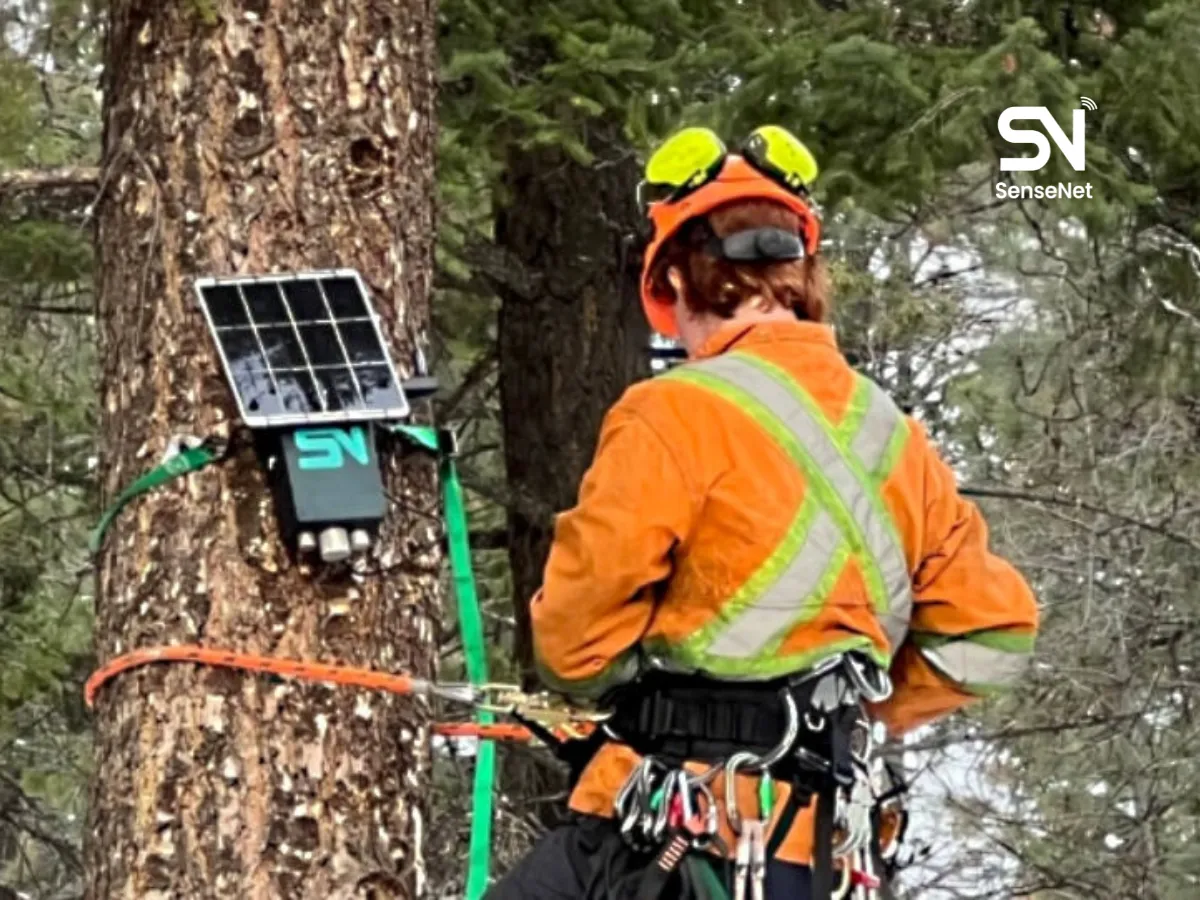
Fortunately, SenseNet has addressed many of these challenges through optimized communication design, AI-powered filtering, and solar-powered sensor nodes, leading to significantly improved accuracy and operational stability.
The Future of IoT-Based Fire Detection
The future of IoT in wildfire prevention looks bright and full of innovation.
Here are some emerging trends that could redefine the field:
- Development of lightweight deep learning models for edge devices
- Advanced sensor fusion algorithms for multi-signal integration
- False alarm reduction using deep learning and multi-factor validation
- Integration of drones and mobile robots for dynamic area coverage
- Use of satellite IoT for remote forest regions
- Adaptive and online learning systems for real-time model updates
- Predictive models based on environmental risk indices
- Enhanced data encryption and privacy protection
- Energy optimization through smart sleep modes and solar harvesting
- Large-scale field testing and comparative validation of systems
Conclusion
IoT-based fire detection systems hold enormous potential to transform wildfire management through early warning, rapid response, and scalable monitoring.
However, their full potential can only be realized by overcoming challenges like limited power, communication delays, and false alarms.
At SenseNet, we’ve already taken significant steps toward this goal, combining smart sensors, visual AI, and hybrid IoT connectivity to create a powerful early warning shield against forest fires.
In many ways, this is not just technology, it’s humanity’s next defense line against nature’s fiercest element.